
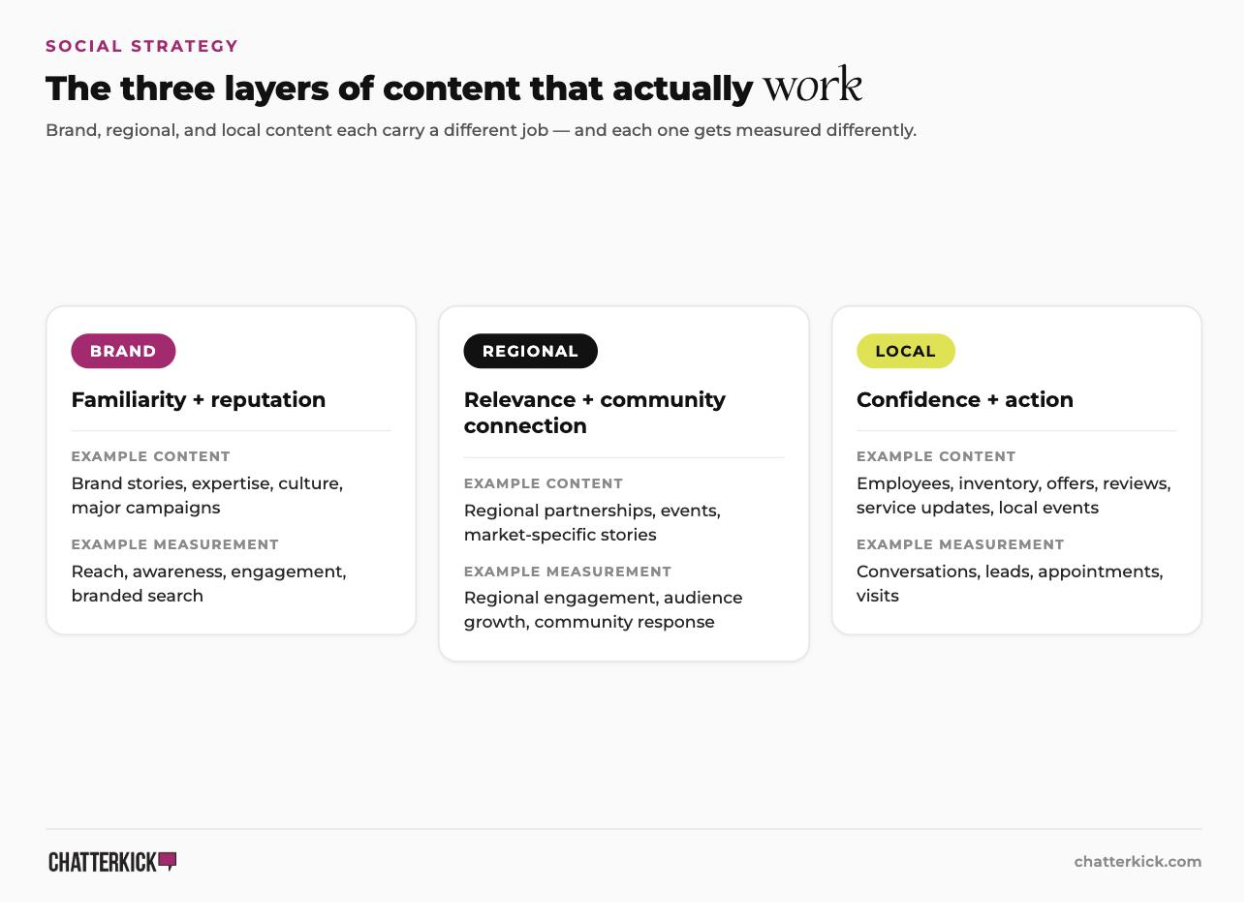
Multi-location social media works best when brand, regional, and local accounts have different jobs. Brand accounts build awareness and familiarity. Regional accounts make the brand relevant to specific markets. Local accounts turn that trust into real customer relationships, appointments, visits, and sales.
Simple enough.
Then you become the CMO of a dealer group, franchise system, or network of regional offices, and discover that “post more” is not much of a strategy.
You’ve got a brand account, regional pages, and dozens, maybe hundreds, of local pages. Everybody has a login. Everybody has something to say. And somehow, all of it is supposed to add up to the same business goals. This is where things can get a little sideways.
The problem usually isn’t that anyone is doing bad work. It’s that multi-location social media is really three different jobs happening at once, and a surprising number of strategies treat them like one.
That distinction matters when you’re evaluating a partner, too. A partner with real multi-location experience should be able to tell you what each layer is there to do, how they work together, and why the strategy changes from one to the next.
If the answer is basically the same for all three, that’s a pretty good sign they’re applying one strategy everywhere.
The Trust Timeline Most Strategies Miss
Here’s the part that tends to wander off while everybody’s busy talking about leads.
People generally like to know who they’re dealing with before they hand over their money. Preferably, they’d also like to trust you. That takes a minute.
Your brand does the long work of becoming familiar. Regional content brings that familiarity a little closer to home. And local content is where people finally get to see the actual humans, hear the actual stories, and find out what they need to know before making a decision.
They’re all building trust. They’re just working different shifts.
Skip the brand and regional work, though, and suddenly the local team is expected to do the whole job. Now every conversation starts at hello. Sales take longer. Local managers keep introducing a company the customer ought to recognize already.
That’s a pretty expensive way to save money on marketing.
Why One Social Strategy Doesn't Work Across Every Location
One of the easiest mistakes in multi-location social media is assuming every account should accomplish the same thing. It sounds wonderfully efficient, but that’s not how people make decisions.
Your brand, regional, and local accounts all have different jobs along the customer journey.
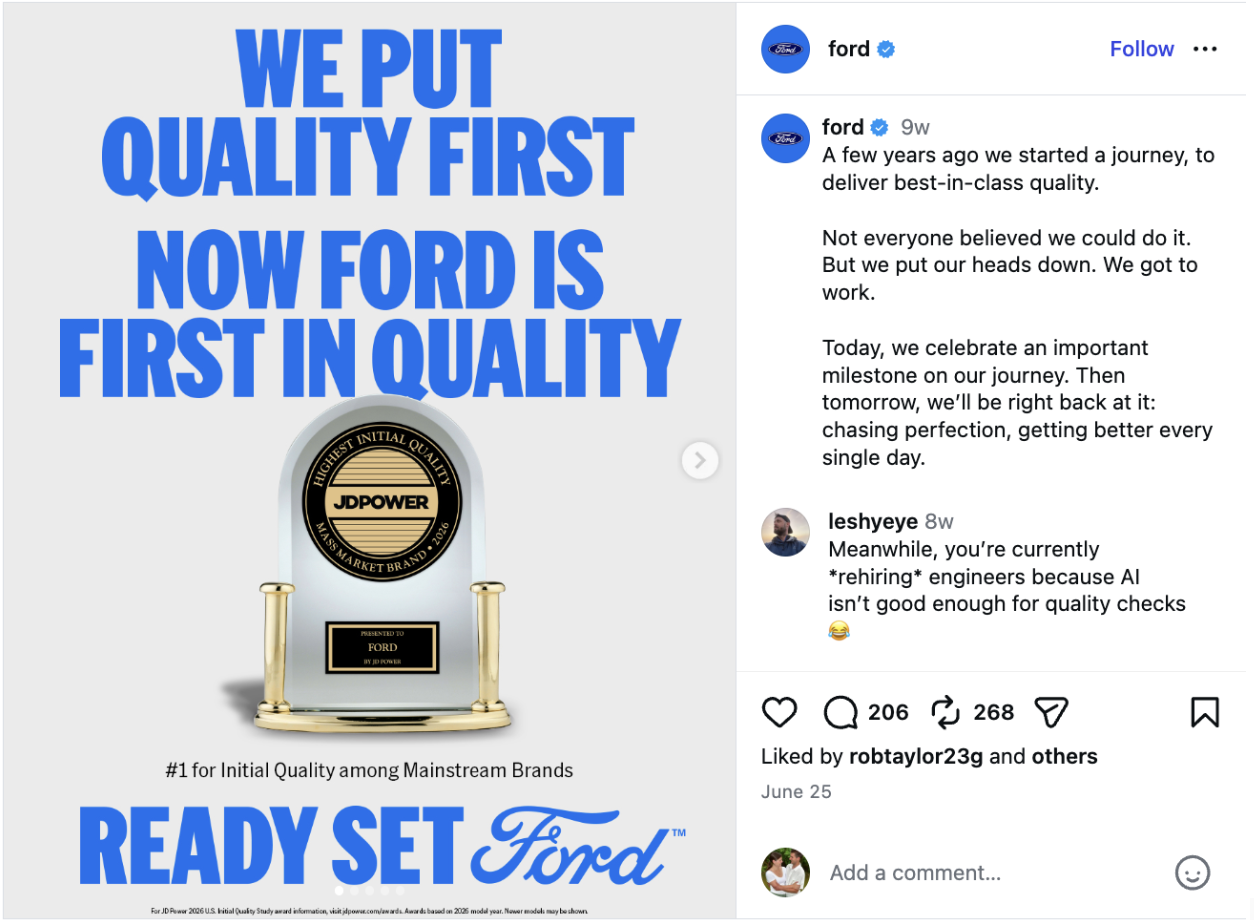
The brand gets the long game. Its job is to build awareness, create consistency, and become familiar enough that when someone eventually needs what you offer, your name isn’t arriving as a complete stranger.
It’s answering “Why should someone choose us?” before they’re even ready to buy.
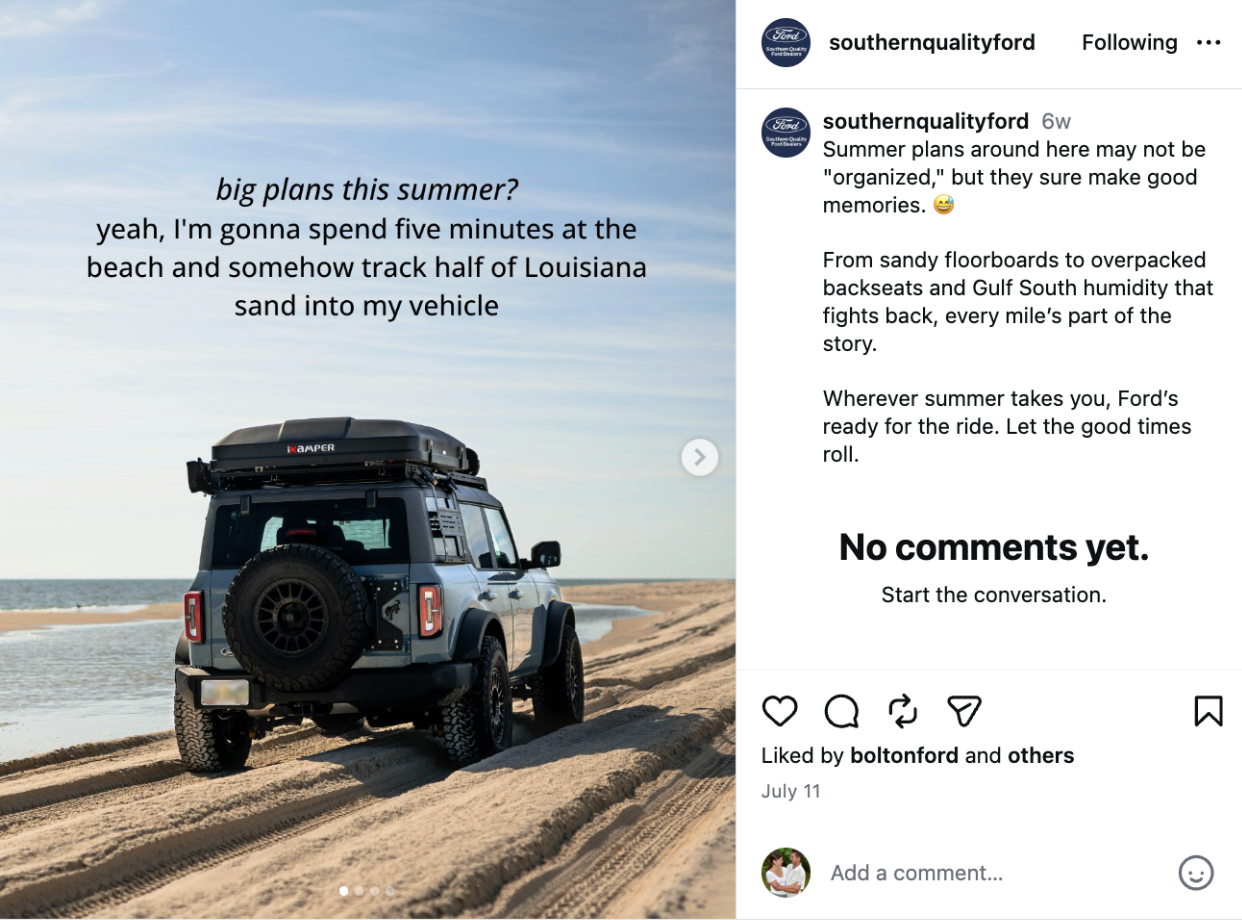
Regional pages bring that bigger brand story closer to home, connecting national messages to the communities you actually serve.
This is where local initiatives, regional stories, and familiar places turn a big brand into one that feels like it belongs around here.
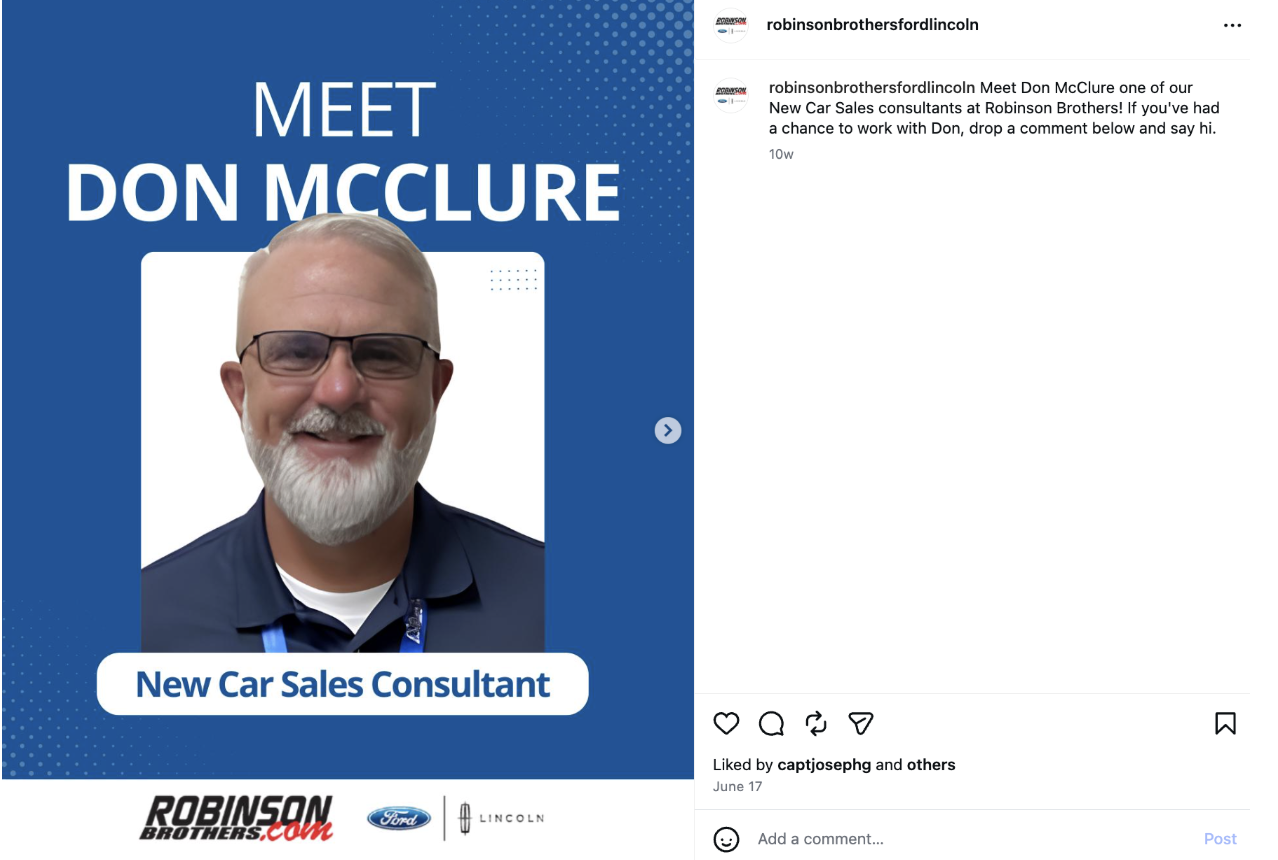
Local pages are where the brand gets a face. This is where customers meet the people, see what’s happening, find the inventory or information they need, and start an actual conversation.
It’s social media at its most personal, and it’s the closest layer to a visit, appointment, or sale.
Take a community initiative. The brand can tell the bigger story about the company’s commitment to giving back, while the regional account shows what that commitment looks like in a specific market.
Then the local page gets down to the people who actually showed up, rolled up their sleeves, and did the work.
Same story, just getting more human the closer it gets to home.
Where Multi-Location Strategies Usually Break Down
After working with multi-location organizations, we’ve noticed the same three troublemakers tend to show up: measurement, competition, and control.
First, measurement.
Boards and ownership groups understandably want social media to prove it’s doing something for the business, but asking every post to produce a direct sale gets tricky pretty quickly. That might be a fair expectation for some local content; it’s a pretty high bar for brand awareness content that’s doing the slower work of making sure people know who you are in the first place.
Then there’s competition.
Local dealers, franchisees, and regional leaders can feel like corporate social is taking attention away from them, while corporate is often building the awareness those local teams benefit from later. It’s really more pipeline than competition, but that can be hard to see when everybody’s staring at a different scoreboard.
And finally, control.
Local leaders want content that actually feels like their market, and corporate wants the brand to look and sound like the same company everywhere. Both are perfectly reasonable things to want. The trouble starts when nobody has clearly decided what each layer owns and where there’s room to move.
None of this necessarily means the strategy is broken. More often, everybody is doing their job according to a slightly different definition of what the job is.
A strong multi-location strategy clears that up. Each layer knows what it owns, what belongs there, and how anybody is going to know whether it worked.
What to Look for in a Multi-Location Marketing Partner
If you’re evaluating an agency, how often they’ll post and which platforms they manage are useful things to know. They’re just not going to tell you whether the agency understands multi-location marketing.
Ask how the strategy changes from brand to regional to local, and pay attention to whether the measurement changes with it. A good partner should know that brand awareness, regional relevance, and local action are different jobs, so naturally they need different goals and different ways of proving they worked.
They should also be able to show you how those results connect. Brand activity creates demand, regional content makes it relevant, and local content turns that attention into conversations, appointments, and sales.
The whole thing should work like a system, rather than three teams politely competing for credit.
And if a prospective partner can’t explain how their strategy changes from one layer to the next, they may not have a multi-location strategy.
They may just have one strategy with an impressive number of passwords.
How We Handle Multi-Location Social Media Strategy at Chatterkick
At Chatterkick, we don’t start with platforms or content calendars, and we definitely don’t start by asking every account to chase the same KPI. We start with the job.
What is each layer responsible for? What kind of trust is it building, and what should happen next in the customer journey because of it?
Once brand, regional, and local teams know what they’re there to do, social starts behaving a lot less like dozens of disconnected accounts and a lot more like one system.
Reporting gets more useful because everyone isn’t being graded on the same thing. Local teams know where they have room to move, corporate knows where consistency matters, and leadership gets a much clearer picture of what all that activity is actually accomplishing.
FAQ’s
-
Not necessarily. A location needs enough unique content, customer interaction, and local ownership to keep an account useful and active. Having 75 locations doesn’t automatically mean you need 75 Instagram accounts.
-
Sometimes. Shared campaigns and big brand moments can absolutely travel, but local accounts need room to add the people, events, inventory, and community context that make the content feel like it actually came from there.
-
Measure each layer by the job it’s there to do. Brand builds awareness, regional builds relevance, and local gets closer to action. Asking every account to prove direct revenue gives you a very tidy measurement system and a pretty incomplete picture of what’s working.
-
Corporate should set clear brand guardrails, then give local teams enough room inside them to be useful to the people they actually serve. The goal is consistency without making every location sound like it was issued the same script.