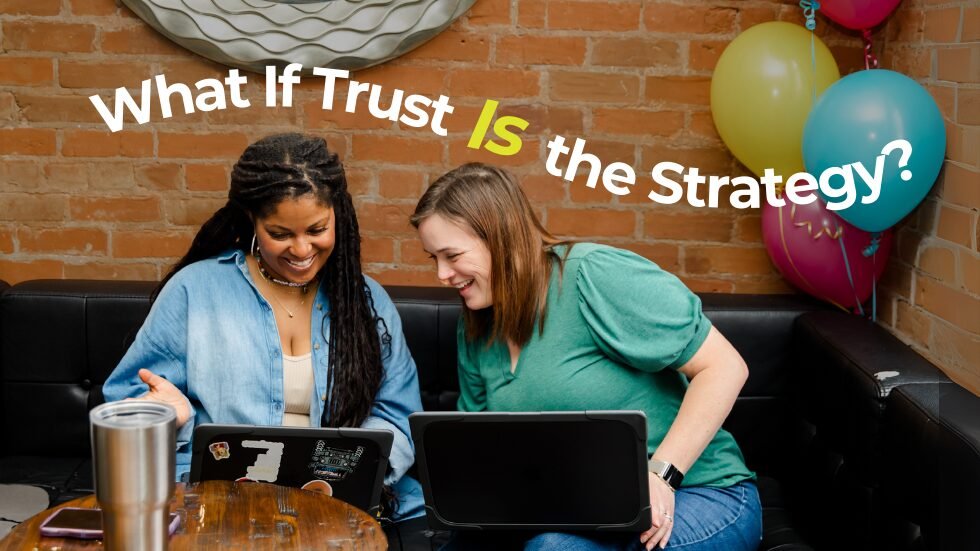
Ever heard someone dismiss brand awareness as “fluff”? We have. And we also see them spending 5x as much trying to warm up cold leads later.
Here’s why:
Traditional lead gen is built to chase. Chase clicks. Chase emails. Chase attention like it’s 2010 and Google Ads were the only game in town. But chasing attention doesn’t build relationships. It builds fatigue and if we’re being really honest, chasing without trust turns your funnel into a leaky bucket.
You pour in all the ad spend, content, and outreach you can muster, and drip…drip…drip…your leads vanish before you ever get a chance to build momentum. Because people don’t buy from funnels. They buy from people.
Trust Isn’t a Tactic. It’s the Whole Damn Strategy.
Trust is the ultimate conversion that’s earned in the small, unsexy moments:
The comment you replied to (with actual empathy, not a canned emoji).
The pricing page that didn’t require an email address first (gasp).
The founder video that felt more like a FaceTime with a friend than a hostage tape.
The brand that shows up consistently (not perfectly) on social.
And when you build it intentionally, things shift from awareness to advocacy.
The Baader-Meinhof Effect, Explained
Ever learn a new word and then suddenly see it everywhere?
That’s the Baader-Meinhof phenomenon, aka frequency illusion. And it works exactly the same for your brand.
When someone notices you once, they start seeing you everywhere.
But here’s the twist: you can’t force that moment. You have to earn it.
You do it through:
Showing up consistently
Sharing value without the hard sell
Acting like a human, not a headline
Suddenly, you’re not some random logo in their feed, you’re the familiar face they trust.
What Does a Trust-First Strategy Actually Look Like?
Let’s get tactical. Here’s what trust-based marketing looks like in the wild:
1. Build for humans, not algorithms.
The algorithm will always reward what people actually like. So optimize for clarity, connection, and feeling.
2. Show your face. (Yes, yours.)
People trust people. Not logos. Not stock photos. Not animated explainer videos.
They want to see your messy bun, your awkward laugh, your unfiltered take.
3. Answer the questions no one else will.
Pricing. Process. What happens if things go sideways.
Transparency is the shortcut to credibility and the long game to loyalty.
4. Turn your content into a handshake.
Your blog isn’t just SEO “secret sauce”. Your videos aren’t just scroll-stoppers.
Every piece of content is an invitation to trust you.
5. Invest in brand loyalty, not just lead lists.
The brands winning right now aren’t chasing leads.
They’re building community. They’re showing up. They’re giving more than they take.